
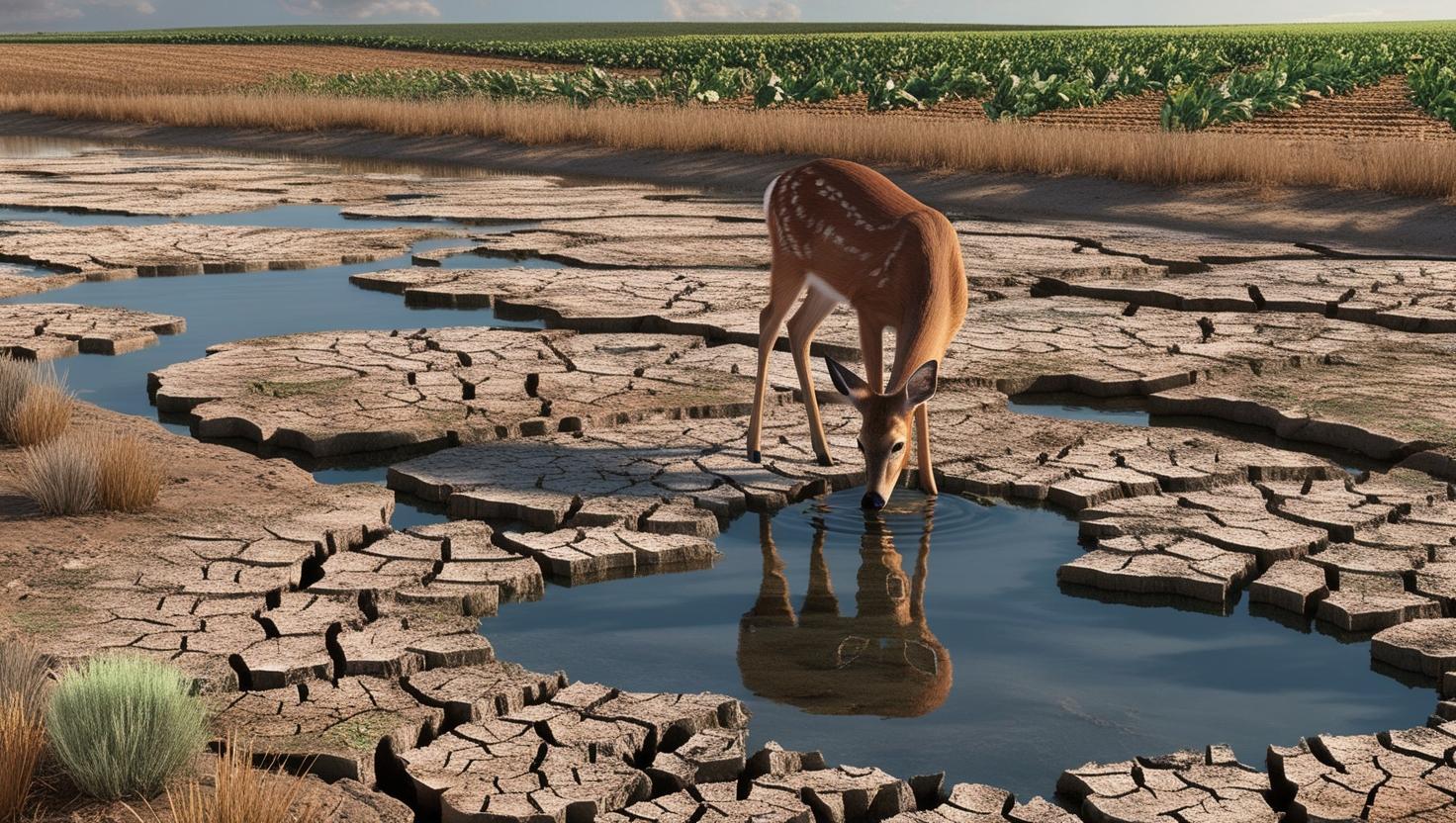
India spans a geographical area of 3.287 million square kilometers, which constitutes approximately 2.4% of the world’s total land area. Despite this, it supports about 18% of the global population, placing immense pressure on its natural resources — especially water. Alarmingly, India has access to only about 4% of the world’s freshwater resources, making it one of the most water-stressed countries in the world.
Agriculture, the backbone of rural livelihoods, consumes about 80% of India’s total available freshwater, yet the efficiency of water use in the sector remains low. This disparity highlights the urgent need for transformative water management strategies. Micro irrigation technologies, such as drip and sprinkler systems, are proven tools that can increase water-use efficiency by 30–60%, reduce energy consumption, enhance crop yields, and serve as a climate-resilient intervention in both irrigated and rain-fed agriculture.
These technologies are not just a necessity — they are a strategic imperative for ensuring India’s food and water security in the face of a growing population, depleting water tables, and climate change.
Water Budgeting and Sectoral Water Use
India receives an average annual precipitation of approximately 4,000 BCM (billion cubic meters), of which only 1,123 BCM is utilizable due to topographical and spatial-temporal limitations. The agricultural sector alone uses nearly 80% of this available freshwater. Industrial and domestic uses consume around 8% and 7%, respectively, with the remaining used for other purposes.
With rising urbanization, industrialization, and erratic monsoons due to climate change, the pressure on available freshwater is increasing. Therefore, water budgeting — which involves planning, allocating, and monitoring water usage across sectors — is essential for efficient resource management.
Micro Irrigation: A Strategic Tool for Water Scarcity and Climate Resilience
Out of India’s total geographical area, approximately 141 million hectares is net sown area, of which about 70 million hectares is net irrigated. However, despite several efforts, only around 17.1 million hectares (as of 2024) has been brought under micro irrigation, representing a significant opportunity for expansion.
Under the Government of India’s flagship Per Drop More Crop (PDMC) component of the Pradhan Mantri Krishi Sinchayee Yojana (PMKSY), over 17 million hectares have been covered under micro irrigation. The majority of this area has been achieved in key states like:
- Karnataka – 2.85 million ha
- Andhra Pradesh – 2.00 million ha
- Maharashtra – 2.23 million ha
- Rajasthan – 2.58 million ha
- Madhya Pradesh – 0.76 million ha
- Gujarat – 1.96 million ha
- Tamil Nadu – 1.46 million ha
- Haryana – 0.75 million ha
These states demonstrate how effective policy implementation, financial incentives, and institutional support can drive micro irrigation adoption to mitigate water stress.
The Role of Urban Wastewater: A Hidden Resource for Agriculture
Another untapped opportunity lies in the treatment and reuse of urban wastewater for irrigation. Cities generate large volumes of greywater which, if treated appropriately, can be reused in agriculture, landscaping, and peri-urban farming, thereby easing the pressure on freshwater sources. Governments can frame clear policies and establish infrastructure to promote the use of treated wastewater in irrigation, especially in water-scarce urban and peri-urban regions.
Mission Mode Implementation at the State Level
To ensure comprehensive adoption of micro irrigation technologies, state governments must adopt mission-mode implementation of PDMC. This includes:
- Creating awareness and capacity-building programs
- Providing financial and technical assistance
- Encouraging public-private partnerships
- Setting state-level targets with a saturation approach
Such focused implementation can help achieve both water-saving and income-boosting outcomes for farmers, particularly in water-stressed districts.
Technology, Monitoring, and Research: Building the Future
A strong institutional framework is essential for scaling micro irrigation. The following strategies can accelerate adoption and ensure sustained impact:
- Dedicated Micro Irrigation Cells at state and district levels to coordinate implementation
- Regular monitoring by Agriculture Commissioners, Secretaries, and Ministers
- Active participation of empanelled manufacturers, ensuring timely supply, installation, and maintenance
- Establishing Centers of Excellence to boost research, technology demonstrations, and knowledge transfer
- Promoting micro irrigation in water-intensive crops (e.g., sugarcane, banana, paddy) and incentivizing crop diversification
- Moreover, researchers and policymakers must explore the integration of IoT-based soil moisture sensors, real-time satellite imagery, and AI-driven irrigation scheduling to provide precise advisories on when and how much to irrigate. While many farmers today use micro irrigation systems, in the absence of scientific guidance, they often over-irrigate, leading to water wastage, declining soil health, and poor water productivity. This gap can be bridged by robust scientific advisory systems powered by digital technologies.
- Future Roadmap and Policy Suggestions
- The path ahead calls for strategic, inclusive, and data-driven actions:
- Digital platforms should be leveraged for scheme implementation, tracking, transparency, and grievance redressal
- A participatory approach, involving farmers, FPOs, and local bodies, should be institutionalized
- A strong monitoring mechanism, supported by GIS dashboards and mobile apps, can bring accountability
- Water budgeting should be integrated into district and state-level agriculture planning
- Micro irrigation saturation must be a measurable goal with annual targets, especially in vulnerable agro-climatic zones
Conclusion
Water is a finite and shared resource. As climate uncertainty and demand pressures grow, the way India manages its water will determine the sustainability of its agriculture and food systems. Micro irrigation is not just a technology—it is a climate-resilient strategy, a water-saving tool, and a growth enabler for millions of farmers. With strong policy backing, digital innovations, and institutional commitment, India can move towards a future where "every drop counts and every field flourishes.