
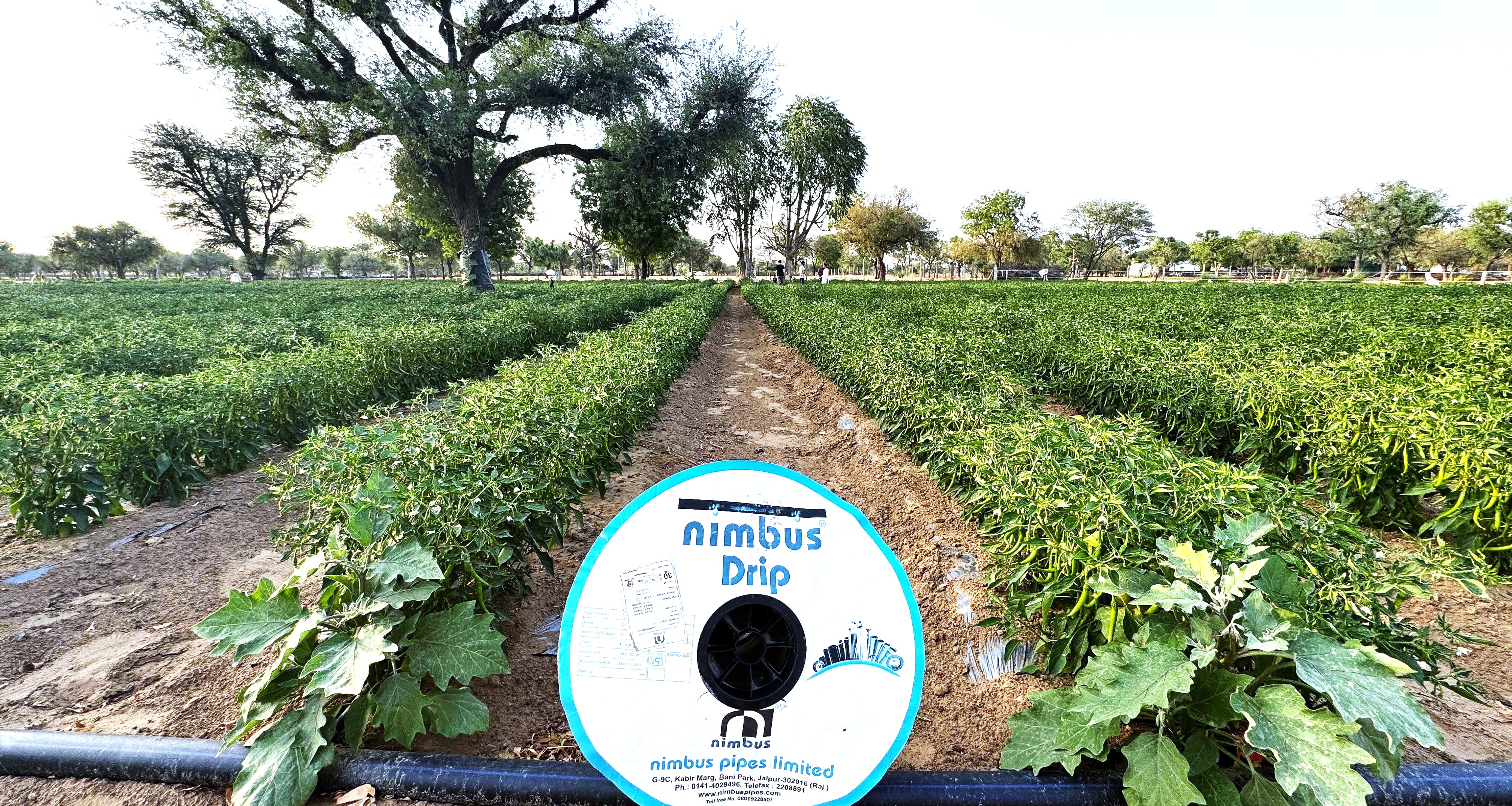

India faces a paradox—while it houses 18% of the global population, it has access to only 4% of global freshwater resources. Within this limited supply, a staggering 80% of freshwater is consumed by the agricultural sector, largely through inefficient irrigation practices.
Despite the scale of usage, water use efficiency (WUE) in Indian agriculture remains critically low—estimated at just 35–40%, far below the global benchmark. This inefficiency, compounded by over-extraction of groundwater and erratic climate patterns, has made agricultural water management a national priority.
The Role of Nimbus Pipes: Bridging the Gap with Innovation
Nimbus Pipes Limited, a group company with deep roots in sustainable infrastructure, is driving a focused response to these challenges. With an emphasis on precision irrigation and automation, Nimbus is helping transform India’s irrigation landscape through smart micro-irrigation solutions.
Key Features of Nimbus’s Micro-Irrigation Systems:
- Drip Irrigation: Directs water precisely to plant roots, reducing evaporation and surface runoff.
- Sprinkler Systems: Ideal for wider crop coverage with minimal water usage.
- Automated Controls: Enable time- and need-based irrigation, improving precision and reducing human error.
- Energy Efficiency: Designed to reduce load on pumping systems and minimize power consumption.
These systems are designed for adaptability, supporting both smallholder farms and large-scale agricultural operations.
Beyond Efficiency: Supporting Carbon Sequestration & Climate Goals
Water is not just essential for crop growth—it is the trigger for photosynthesis, the process through which plants absorb carbon dioxide and synthesize food. Efficient irrigation ensures optimal plant health, which in turn enhances carbon sequestration capacity—a critical factor in climate mitigation strategies.
By enabling more consistent and precise watering, Nimbus's solutions indirectly support the global climate agenda, making farms active contributors to carbon removal rather than just resource consumers.
Strategic Insight: Should water-efficient agriculture be formally recognized as a carbon mitigation strategy in climate policies?
Farmer-First Design: Accessibility & Ease of Adoption
While technology is key, accessibility and ease of use are non-negotiable. Nimbus has designed its solutions with these realities in mind:
- User-Friendly Setup & Maintenance
- Compatibility with Government Subsidy Programs
- Affordability for Small & Marginal Farmers
- Customizable System Design for Diverse Crops and Terrains
This approach ensures broad adoption and lasting impact, rather than one-size-fits-all fixes.
Field Perspective: What are the barriers preventing mass adoption of micro-irrigation systems, and how can industry players address them?
Towards Water, Food & Energy Security
The nexus between water, food, and energy has never been more apparent. Solutions like those from Nimbus Pipes represent more than just innovation—they are critical infrastructure for a resilient, self-reliant India. By enhancing WUE in agriculture, these systems help secure:
- Water Security – through minimized wastage and smart distribution
- Food Security – through improved yield reliability
- Energy Security – through reduced dependence on high-power water pumping
Conclusion: Building a Climate-Resilient Agriculture Model
With climate change, water stress, and food demand converging, India must rapidly embrace technologically advanced, climate-aligned agricultural practices. Nimbus Pipes Limited is at the forefront of this transformation—empowering farmers, conserving water, and enabling carbon capture through smarter irrigation.
The path forward requires collaboration across sectors—technology providers, policy makers, agri-professionals, and grassroots communities. Together, we can create a future where agriculture thrives not at the expense of the environment, but in harmony with it.